Sampling from BigBags: What actually happens between delivery and the laboratory
A BigBag is on the pallet. One ton of material, sometimes more. It was delivered, weighed, and placed. Now it is waiting to be transferred further into the process. However, a sample must be taken first - a routine procedure.
Someone grabs the manual sampler, inserts it, pulls it out, and fills it. A few minutes later, the sample is in the cup, and the BigBag is on its way to storage.
And it is precisely in this short time span that something is decided, which cannot be seen in the sample later: Does it actually represent the material in the bag or just the spot where it was randomly tested?
Why the BigBag is a special case
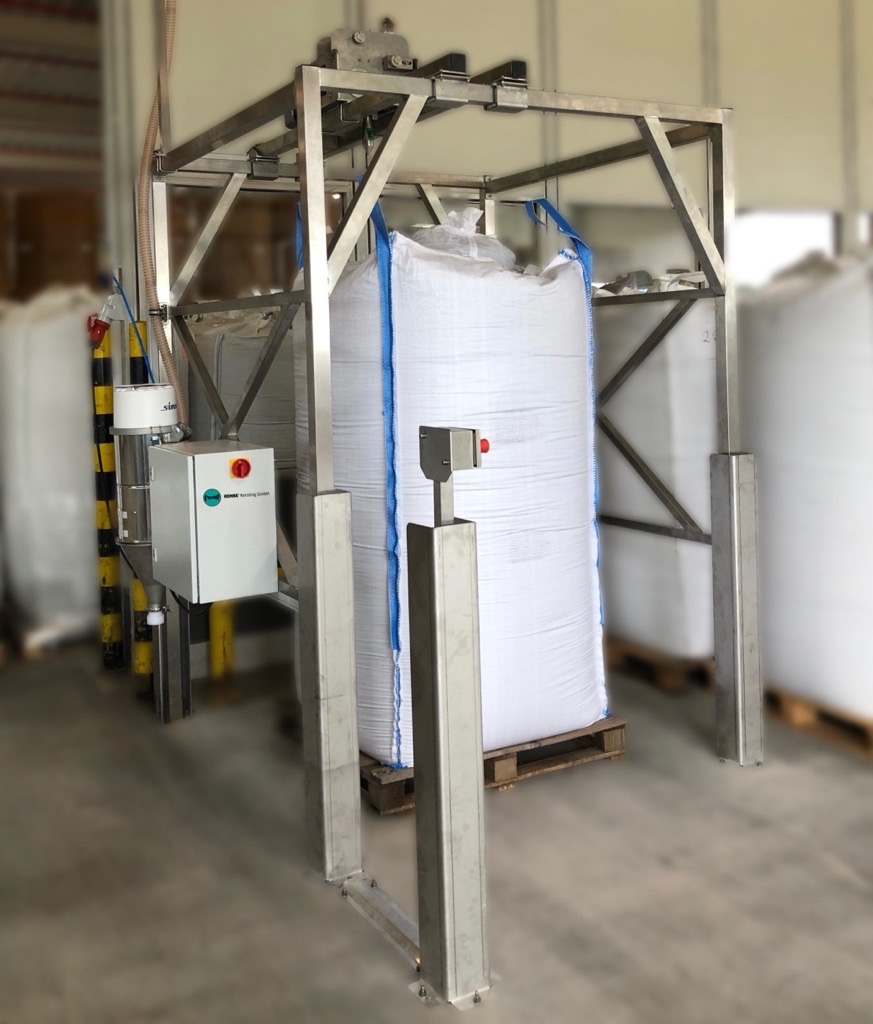
Bulk material in BigBags does not behave homogeneously. During filling, transport, and settling, the material segregates. Fine particles migrate downwards or to the center, coarser components accumulate at the edge or bottom, and moisture is distributed unevenly. What lies at the top in the puncture zone may not be representative of what is half a meter deeper in the bag.
A single puncture at a specific point captures exactly that one point of this uneven distribution. The resulting analysis may be precise, but it may not describe the BigBag, only the grab inside.
There is also a second problem that is often underestimated in practice: fine powders. Materials like milk powder adhere, are difficult to remove, and tend to leave residues in the sampler. What is carried over to the next bag distorts two samples at once – the current and the previous one.
When the sample itself becomes the source of error
In many companies, sampling from BigBags is still done manually. The processes are established, documented, and function reliably in everyday operations. But it is precisely where routine meets manual steps that inaccuracies arise.
The penetration depth varies from person to person. The spot where the sample is taken is rarely the same. With large quantities or under time pressure, samples are taken less frequently and more shallowly than would actually be necessary.
Additionally: Cleaning the manual sampler between two BigBags – actually crucial to avoid cross-contamination – is often the first step omitted during ongoing operations.
In normal operations, none of this is noticeable. The sample has been taken, labeled, and archived. Only when a batch is questioned does the question arise of what this sample actually proves: the delivered material – or the way it was taken.
What a representative sample really needs
A sample is representative if it reflects the entirety of the material, not just a section. In the case of the BigBag, this specifically means: not just one point, but the entire layering. From the upper area deep into the bag – across all layers where the material has distributed differently.
This all-layer sampling is hardly reliably reproducible by hand. Too many factors influence the result: the experience of the employee, the current work situation, or simply the available time frame. Therefore, manual sampling often represents a compromise between effort and meaningfulness.
This also changes the question. No longer: Was a sample taken at all? But rather: How reliably does this sample reflect the actual content of the BigBag – regardless of who took it?
If the withdrawal becomes part of the process
Automation can fundamentally provide relief here. Instead of someone punching, filling, and cleaning, a system takes over the extraction as a defined step in the material flow.
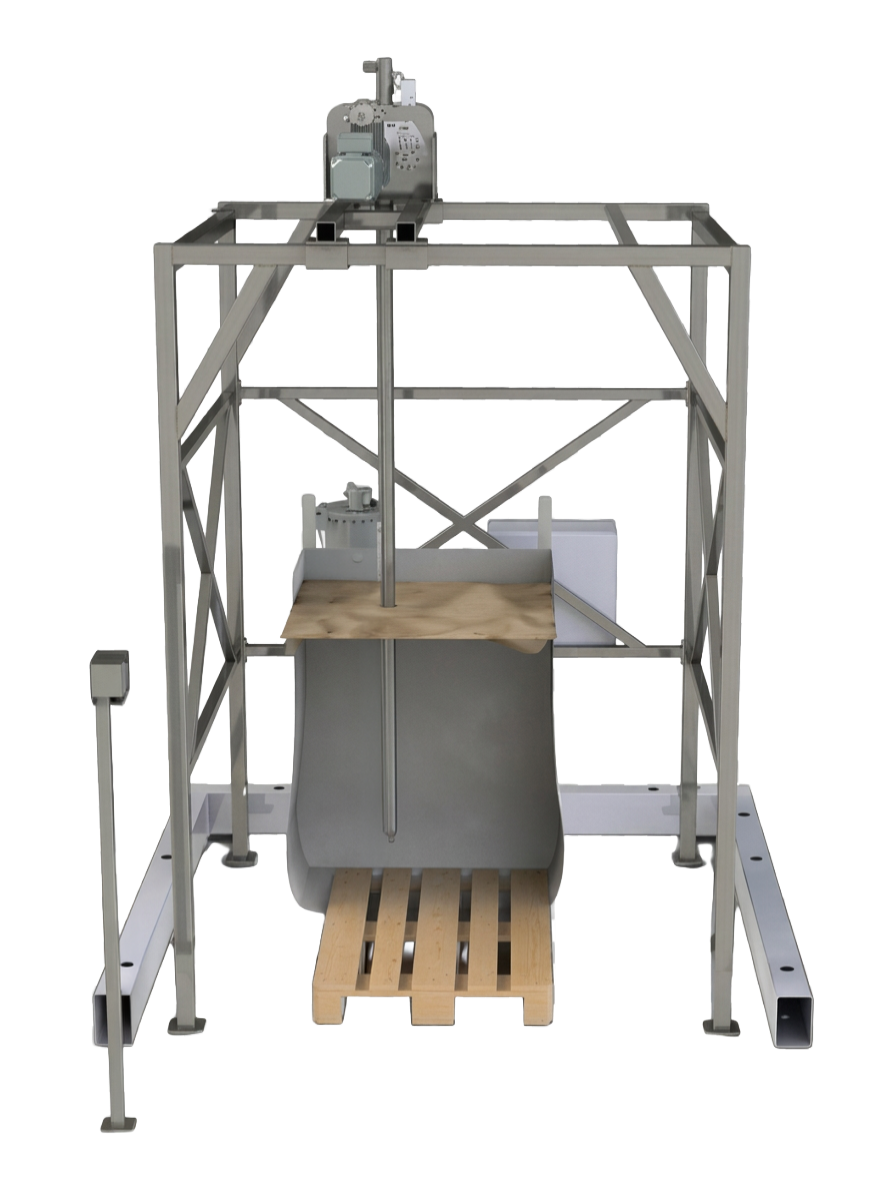
The SAMbag from REMBE® Kersting is designed precisely for this case: representative sampling from BigBags. A lance automatically enters the bag and takes an all-layer sample – that is, over the entire depth, through all layers where the material is distributed differently. Not a point, but a cross-section.
The device is made entirely of stainless steel and constructed so that even very fine powders can be handled safely and controlled. An automatic container and filter cleaning ensures that no residues are carried over between two extractions – the step that is most likely to be omitted by hand is a fixed part of the process here. The sample is not ground but gently handled. Fine and coarse material ends up completely in the collection container, preserving the original grain size.
And the sample does not remain lying around. It can be directly led to the collection vessel and further to the laboratory if needed – short paths, no intermediate steps, no decanting. Even larger sample quantities over five liters are possible without samples needing to be mixed or decanted afterward.
What this means in everyday life
The difference is unspectacular – and that is precisely its strength. Sampling is no longer "just done," but becomes a clearly defined part of the process. Each sample is taken under the same conditions: same penetration depth, same layering, clean containers.
This saves time because the high throughput accelerates sampling and does not slow down goods receipt. It relieves the staff because the laborious cleaning is eliminated. Above all, it removes a source of error from the process that is no longer visible in the finished sample.
If the process can also be integrated into existing transport systems – for example, via a roller conveyor or directly during forklift loading – an isolated action becomes a continuous step in the material flow.
The inconspicuous decision in the bag
Sampling from the BigBag rarely takes center stage. It only takes a few minutes, seems incidental, and is quickly done. Yet, it is precisely this moment that determines whether a later analysis actually evaluates the material – or merely the area from which the sample was taken.
In an industry where material quantities are growing, processes are becoming faster, and the demands for documentation and traceability are increasing, this very difference becomes more important. And thus the question: How reliably is this one grab into the bag designed in your process?