Sampling in Goods Receipt and Goods Issue: The Moment When Quality is Decided
A truck drives into the yard. The goods are received, inspected, stored. Everything runs as usual. A few hours or days later, another truck leaves the factory – loaded with finished product, ready for the customer.
And somewhere in between lies an inconspicuous, often underestimated process: sampling. It only takes a few minutes. But it is precisely at this moment that it is decided whether quality can be proven later – or not.
When routine becomes a vulnerability
In many companies, sampling is simply part of the process. It is carried out, documented, filed. Just routine. But that's exactly where the risk lies.
Because as soon as processes are under time pressure, procedures are repeated, or personnel changes, small inaccuracies arise. A sample is taken later than planned. A label is not clear. A batch can no longer be clearly assigned afterwards. In everyday life, this is hardly noticeable. In the event of a complaint, it is.
Then a seemingly small inaccuracy quickly becomes a central question:
What exactly was delivered – and can it still be proven?
Goods receipt: The first look at quality
The first critical moment arises before the goods are even in the process.
When a truck arrives, a quick decision must be made: Does the quality fit – or not?
But this decision is only as good as the sample on which it is based.
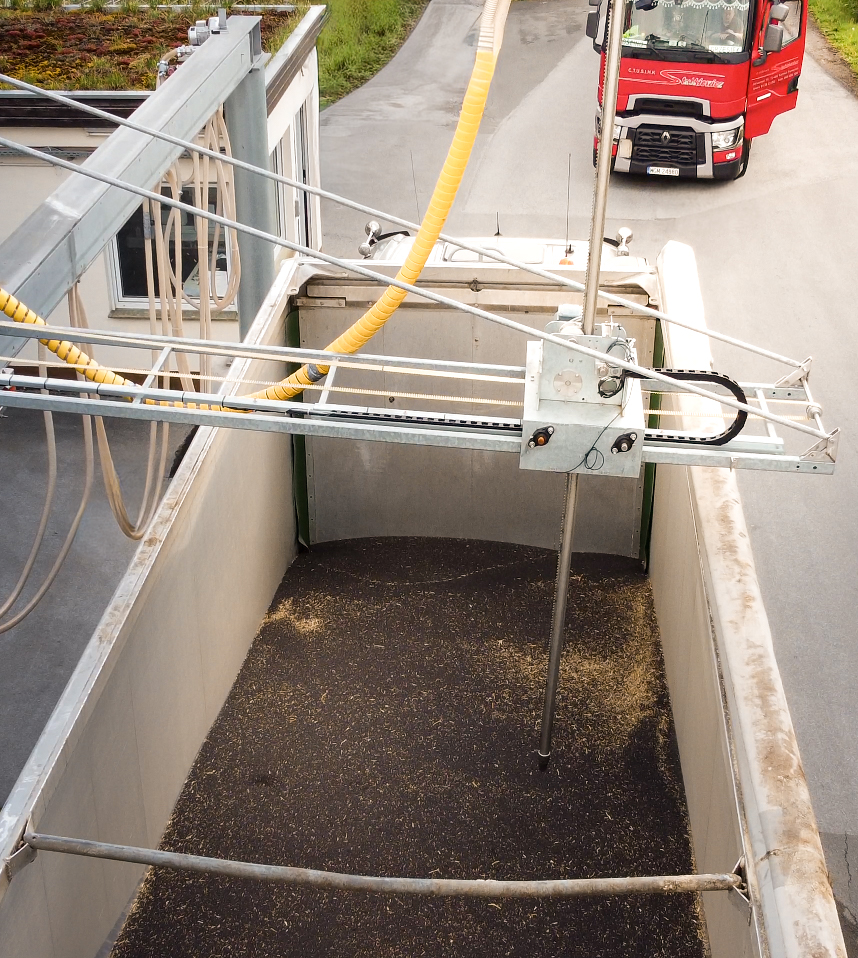
A single sampling is often not enough to represent the actual quality of a material. Therefore, samples are taken at several points to obtain the most realistic picture possible.
This is exactly where automated solutions like the SAMtruck from REMBE® Kersting come into play. The system enables structured and reproducible sampling directly at the truck, regardless of the operator or situation. Multiple sampling points ensure that the sample realistically reflects the actual condition of the delivery.
What sounds simple is demanding in practice. Different materials, changing deliveries, and time pressure ensure that the sampling must be as reliable and reproducible as possible. Because what is misjudged here affects the entire process.
Goods Issue: The Moment of Truth
It becomes even more critical at the goods dispatch. Here, it's no longer about evaluation but about responsibility. The goods leave the factory – and with them, the control. What remains is the sample.
It is the only proof of the condition in which the product left the factory. If it is missing or not clearly assigned, a gap arises that can hardly be closed later.
At the same time, this area is particularly prone to problems:
- High loading speeds,
- changing drivers, and
- automated processes
make it difficult to consistently monitor every step.
The result: Samples are not always taken as they should be – or, in the worst case, not at all.
When processes secure themselves
The question is therefore not whether samples are taken – but how reliable this process really is. This is exactly where automation changes the perspective.
Instead of employees having to actively intervene, sampling is directly integrated into the process. The sample is taken exactly where the material flows. It is automatically forwarded, processed, and documented – without additional effort.
Systems like the SAMbutler not only take over individual steps but the entire process: from sampling to weighing to packaging and labeling.
The sample is sealed, clearly assigned, and available as a reference – traceable at any time.
What this really means in everyday life
The difference is less spectacular than one might expect – and that is precisely its strength. Sampling is no longer "considered," it just happens.
Each sample is created under the same conditions. Each sample is clearly documented.
This creates security. Not only in audits but especially in everyday life.
Because when something happens – and in practice, something always happens eventually – the crucial question is no longer whether a sample exists.
But only: What does it show?
From the individual process to comprehensive security
The real strength becomes apparent when goods receipt and goods issue are considered together. Then a continuous chain is created: From the first sample upon delivery to the last sample before dispatch. Every movement of the material is thus traceable. Every batch can be tracked. And from many individual steps, a system emerges that secures itself.
The inconspicuous decision in the process
Sampling is not a spectacular process. It rarely takes center stage. But it is the point at which it is decided whether quality can only be assumed or actually proven. In an industry where quantities, speed, and demands are constantly increasing, this very difference is becoming more important.
And thus the question: How reliable is this one moment in your process really?