
When the fill level is right but the mass isn't – Part 2: How gravimetric measurement works
In the first part it became clear: A correct fill level does not automatically mean that the correct amount is present in the silo. Especially with bulk materials, the level may appear correct at first glance, while the actual mass in the container differs. For many applications, therefore, it is not the visible fill level that is decisive, but the actual mass.
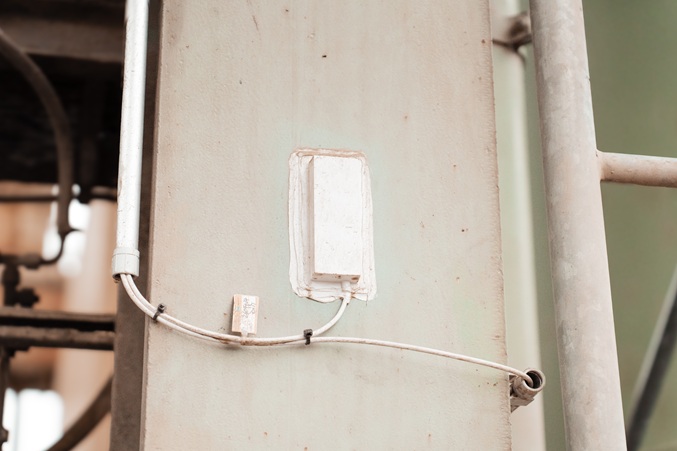
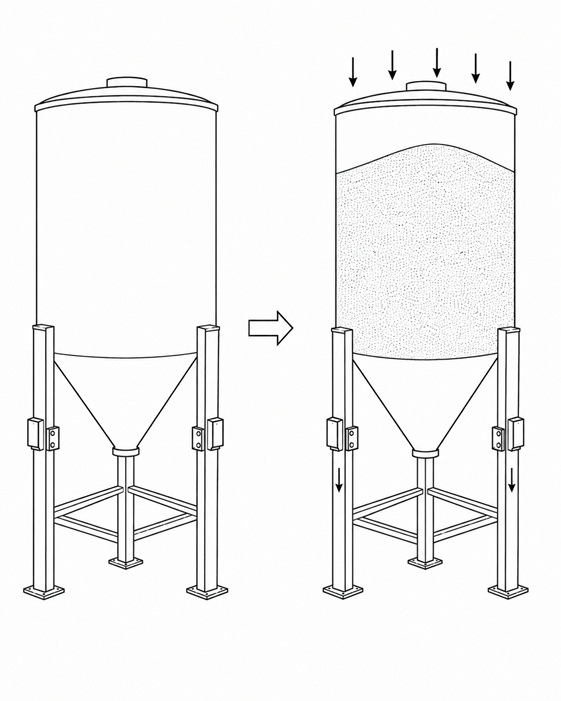
This is exactly where gravimetric measurement comes in. It does not record the contents directly, but the load acting on the silo construction. If the fill level changes, the load on the load-bearing structure also changes. This change is recorded by the sensors and converted into a weight signal.
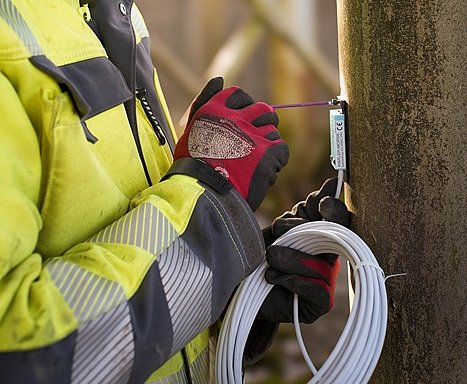
This makes the process particularly interesting for existing silos or silos with incorrectly designed sensors. The sensors are attached to the existing support structure and use the mechanical forces that act on the silo anyway as a basis for measurement. This does not require a complex conversion of the container.
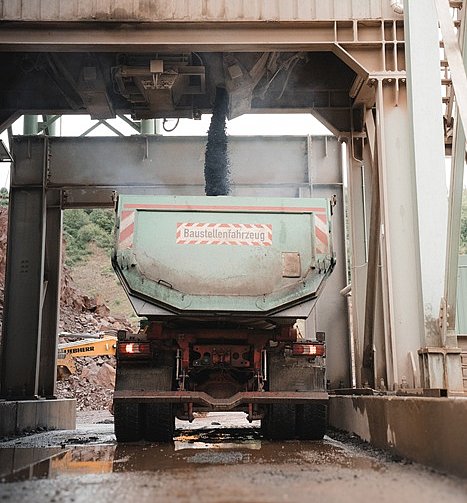
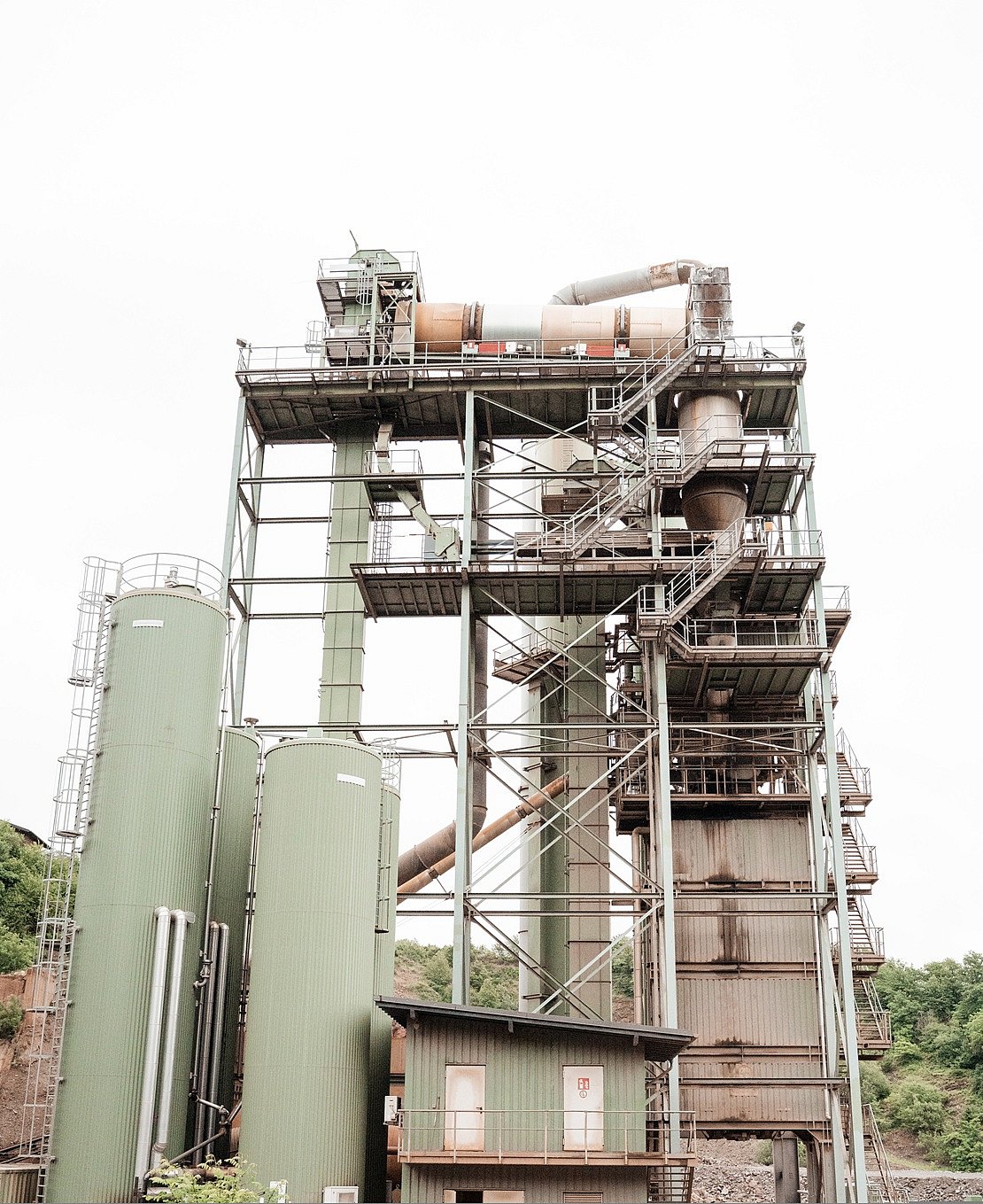
This can be explained particularly vividly using the example of asphalt truck loading. Here it is not only important that there is sufficient material in the silo, but that the right amount is available quickly and reliably. If too little is loaded, additional trips and loss of time occur. If too much is loaded, there is a risk of overloading, unnecessary effort and safety risks in the loading area.
This is exactly where gravimetric measurement comes into its own. The loading is not based on the external impression or an estimated fill level, but on the actual mass in the silo. This makes loading more reproducible and the process safer overall.
In practice, the MicroCell controller can be combined with existing dosing and control solutions. This means that loading can be automated or even manually supported without the driver having to weigh several times. This saves time, reduces errors and increases process reliability in daily operations.
Why this convinces
Especially in the case of bulk materials, the fill level and mass are not identical. Surface, material behavior and distribution in the silo can lead to the fact that the visible level is correct, but the actual quantity is not correct. The gravimetric measurement provides the more reliable value here because it is based on the weight of the system.
For operators, this means more transparency, better planning and a more reliable basis for loading and inventory control. And that's exactly why in many applications it is not the fill level, but the mass that is the decisive factor.
Overview of different measurement methods
In addition to gravimetric measurement with MicroCell, REMBE® Kersting also offers radar sensors for level measurement as well as classic load cell solutions. Each method has its own strengths and areas of application.
- Radar sensors measure the distance to the material surface without contact. They are insensitive to dust and are well suited if the fill level is to be continuously monitored. However, their accuracy depends on the material surface and silo geometry.
- Classic load cells deliver very high measurement accuracy, but usually require mechanical intervention in the silo construction. They are particularly useful where the highest accuracy is required and conversion is possible.
- MicroCell as a gravimetric solution uses the existing support structure and can be retrofitted without downtime. It is particularly attractive when fast, cost-efficient retrofitting is desired and mass is the more important parameter than the pure level.
Depending on the silo type, process requirements and accuracy requirements, these methods can be the right alternative or complement to each other.
The right solution for your application
Which measurement method suits your silo best depends on many factors. We will be happy to advise you individually - just contact us.