Safe and Residue-Free Sample Transport: Why the Path to Analysis is Decisive
There is a lot of talk about sampling – but rarely about the path of the sample afterwards. It is precisely there that errors occur, which can no longer be detected in the laboratory. An analysis result always only applies to the sample as it arrives in the laboratory. Everything that happens during transport is considered a systematic error in the evaluation of the entire batch.
What can go wrong during transport
The section between the sampler and the transfer point is not a neutral piece of pipe. It is a process step with its own risks:
- Carryover: Residues from the previous sample in the line or separator mix with the current sample – classic cross-contamination, particularly critical during batch and product changes.
- Segregation: Fine and coarse fractions separate on the conveyor path. The sample is then clean, but no longer representative.
- Particle Grinding: Too high conveying speed destroys particles and shifts the particle size distribution, an effect that distorts exactly the parameter that is often to be measured.
- Abrasion and Foreign Material: Abrasive bulk materials wear down pipes and hoses. What is worn off ends up in the sample.
- Moisture and Oxygen: Hygroscopic or oxidation-sensitive products change as soon as the transport path is not closed.
- Dust Emission: Open transfers burden the environment – an issue for occupational safety and explosion protection, not just for sample quality.
For this reason, sample transport at REMBE® Kersting is not an accessory that is flanged on later, but part of the design of the sampling system.
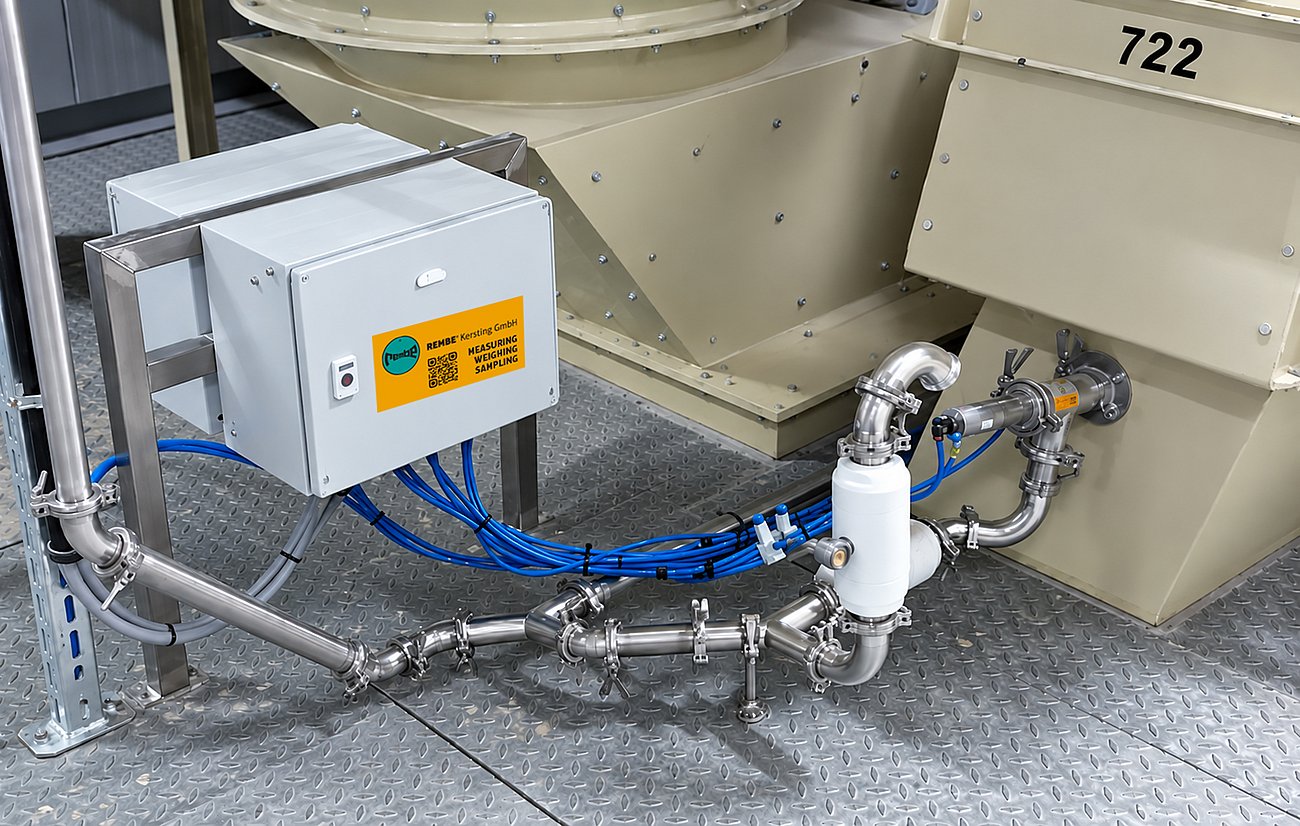
One transport system per material – not one for all.
Whether powder, granulate, or free-flowing bulk material: Suitable conveying technology is available for every material. The selection follows three groups of criteria:
- Material properties: Bulk density, flowability, particle size distribution, abrasiveness, tendency to stick, moisture and oxygen sensitivity.
- Conveying route: Length, height difference, number and radius of bends – each bend is a potential point for deposition and particle breakage.
- Process requirements: Sample quantity, cycle time, hygiene level, cleaning strategy, requirements from explosion protection or containment.
Only from this combination results a transport that operates safely, product-friendly, and with minimal residues. There is no standard solution that simultaneously fulfills all three goals for every material – and whoever offers it has silently given up one of the three goals.
Passive transport or active transport?
As a rule, the sample taken falls directly into the sample bottle or into the sample carousel through a drop line. The crucial factor is the design of the line: it is constructed in such a way that no residues remain from the preliminary sample. Depending on the product – powder or granulate behave significantly differently here – a specially developed cleaning system is installed.
If there is no space under the sampling point or if the sample is needed at a point about 20 meters away or higher, an automatic sample transport is used. The distance that can be bridged depends on the product and the line routing and is designed for the specific case – without cross-contamination with the previously taken sample and also for small sample quantities. Instead of a fixed device, there is a modular system from which the route is assembled.
If the product is already being pneumatically conveyed, the sample can also be taken directly from the running line – for example, via the sampling nozzle SAMtasty, which is specially designed for pneumatic pipelines and can be installed both horizontally and vertically. This method is also designed together with the sampling system so that extraction, transport, and cleaning remain coordinated.
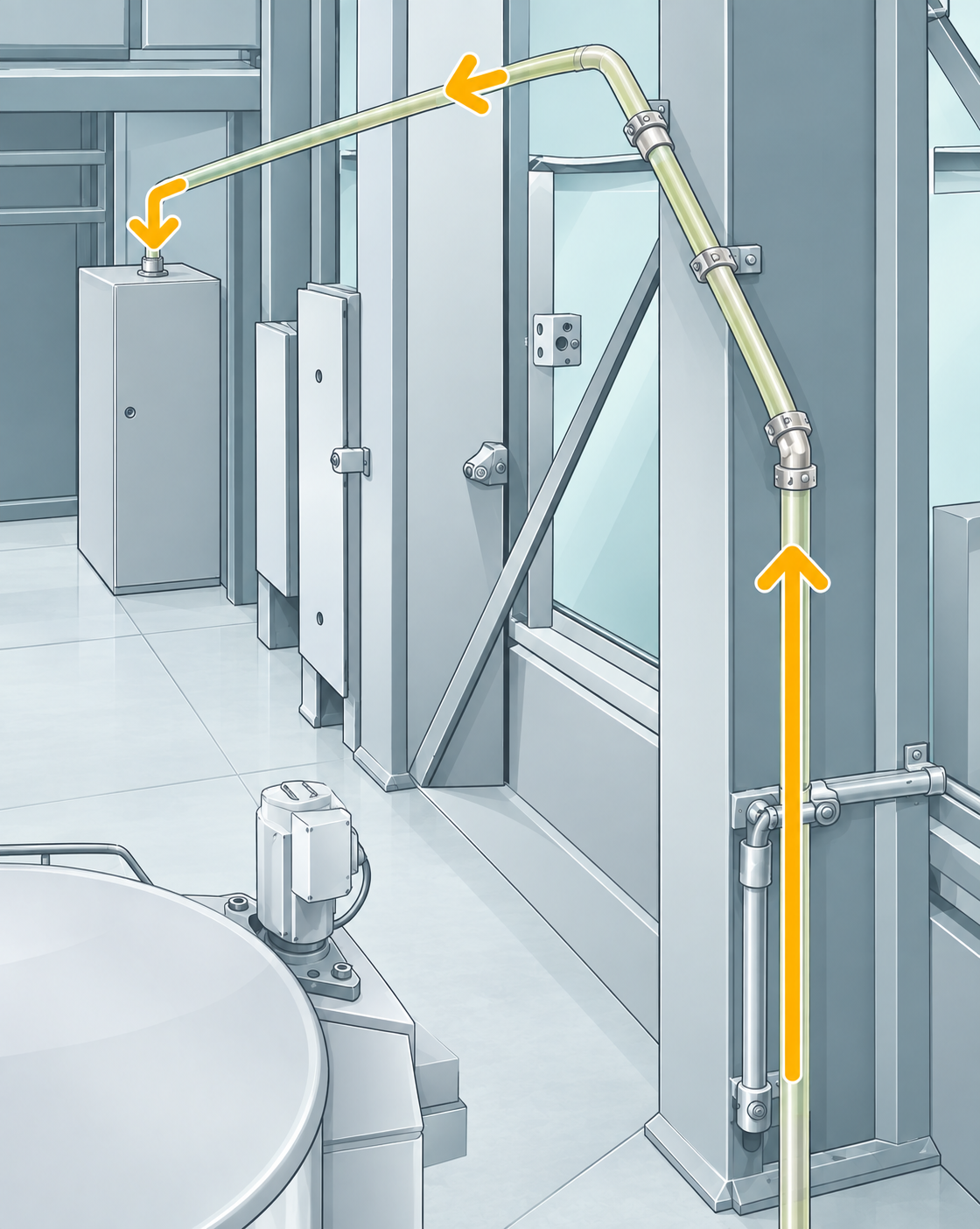
Conveying technology expertise from the REMBE® Alliance: SIMAR®
For sample transport, REMBE® Kersting relies on the experience of the sister company SIMAR® within the REMBE® Alliance. Since 1977, SIMAR® has been building pneumatic conveying technology for bulk materials – from Venturi and granulate conveying devices to powder conveying devices and central feeding to suction impulse systems and special separators. This know-how flows directly into the automated sampling systems.
For operators, this has a very practical effect: samplers and transport systems come from a single source, are coordinated with each other, and have a central contact person. The classic interface discussion between two suppliers – "the device delivers correctly, the line is not our issue" – is eliminated.
Hygiene: automatic cleaning and optional hot air flushing
For the highest hygiene requirements, the transport lines can be automatically cleaned. Product residues are reliably removed, and cross-contamination between different batches is avoided. It is important that the cleaning can be done dry – in many processes, wet cleaning in the sample path is not permissible.
In special applications, the transport lines can additionally be flushed with hot air. This allows residual moisture to be removed and the microbial load of the conveying path to be reduced. This supports hygienic processes, especially after conveying critical products – particularly relevant in the food, feed, and pharmaceutical industries.
What is changing in the operation
- Time and Personnel: The automated transport replaces many manual work steps. This saves time, reduces personnel requirements, and ensures consistent processes.
- Process and Manipulation Security: Human error sources and manipulation possibilities are significantly reduced. Each sample reliably and traceably reaches its destination – a point that counts in audits and traceability proofs.
- Occupational Safety: Employees no longer have to manually carry the sample through the facility and come into contact with the product or dust-laden areas less frequently.
- Operating Costs and Availability: High operational reliability and low personnel requirements reduce ongoing costs, while plant availability increases.
Modular Thinking: Today Sampler, Tomorrow Transport
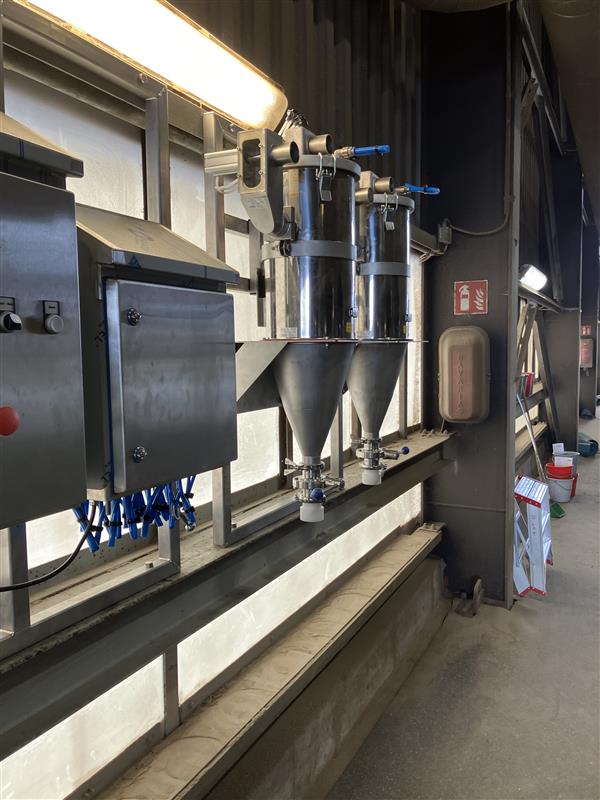
All transport systems can be seamlessly combined with the samplers from REMBE® Kersting – from extraction from pipelines, mixers, or silos to transport to packaging or analysis. Samplers and transport systems can be expanded or adapted independently of each other.
If a company initially decides only for a sampler, an automatic transport system can be retrofitted at any time. Existing systems thus remain future-proof: If processes, product range, or hygiene requirements change, the entire sampling point does not need to be rethought.
Five Questions Before the Interpretation
- Which material is being transported – and how sensitive is it to speed, moisture, and oxygen?
- How long is the route, what is the altitude difference, and how many bends need to be bridged?
- What sample quantity is needed at what interval?
- What level of hygiene is required – is a dry cleaning sufficient or is a hot air rinse advisable?
- Where does the transport end: sample bottle, sample carousel, packaging, or direct analysis?
Anyone who can answer these five points has already prepared the core of the design.
Conclusion
With REMBE® Kersting and the sister company SIMAR® within the REMBE® Alliance, complete sampling and transport systems come from a single source. The conveying technology tailored to the respective material ensures safe, low-residue, and hygienic sample transport. Automatic cleaning and optional hot air rinsing systems support the highest hygiene requirements. At the same time, operators benefit from time and cost savings, higher process and work safety, as well as a modular system that can be expanded or retrofitted at any time.
How does your sample get from the sampler to the lab today – and what happens to it along the way?
Together with you, REMBE® Kersting examines your sampling point: material, route, hygiene requirements, transfer point. From this, a transport concept is developed that fits your process – and can be expanded later.