
EN ISO 24333
Cereals and cereal products – Sampling (ISO 24333:2009; German version DIN EN ISO 24333:2010)
Brief definition
EN ISO 24333 is an international standard specifying the requirements and procedures for static and dynamic sampling of cereals and cereal products using manual and mechanical methods. Its aim is to obtain representative samples of a lot as the basis for assessing quality and safety through laboratory analysis. In manufacturing, it bridges physical material logistics and analytical quality assessment: an analytical result can only be as accurate as the sampling that preceded it.
Definition in the context of the process industry
Throughout the cereal production chain (flour mills, compound feed plants, starch and bioethanol production, breweries and breakfast cereal manufacturing), EN ISO 24333 defines standardized methods for collecting representative samples from bulk materials so that quality- and safety-related properties can be evaluated using reliable measurements.
In particular, the standard covers:
- Sampling methods – static sampling from stationary bulk materials (silos, warehouses, vehicles) and dynamic sampling from free-flowing product streams (screw conveyors, downpipes, conveyor belts).
- Sampling equipment – manual tools (grain probes, sampling scoops, sampling spears, dippers) and mechanical sampling systems (pipe samplers, pneumatic collectors, flow samplers).
A primary objective is to minimize sampling error, which is often statistically significantly greater than the analytical error in the laboratory itself.
Scope and limitations
Product types
The standard applies to:
- Cereals (wheat, maize, barley, rye, oats, etc.)
- Cereal products (flour, semolina, bran, flakes, pellets)
It does not apply to seed, which is subject to separate sampling standards and quality criteria.
Parameters and substance groups
EN ISO 24333 can be used for sampling to determine:
- Heterogeneously distributed contaminants – e.g. mycotoxins (DON, T-2/HT-2, aflatoxins), heavy metals, pesticide residues and foreign matter.
- Undesirable substances – e.g. ergot, ragweed seeds and elevated levels of extraneous matter.
- Homogeneously distributed parameters – e.g. moisture content, crude protein, falling number, vitreousness and impurity content.
- Insect infestation in grain batches.
The standard also applies to the assessment of lots of genetically modified organisms (GMOs), but is not suitable for determining adventitious (unintentional) GMO presence in non-GMO products.
Key terms in the standard
- Lot: An identified quantity of product from which a sample is taken. In practice, this may be a silo compartment, a truckload, a production shift or a defined production campaign.
- Increment (single sample): An individual portion collected at a specific point. Typical mass: approximately 0.1 kg.
- Bulk/aggregate sample: The combination of all increments from a lot, homogenized to form an overall representative sample.
- Laboratory sample: A smaller portion obtained by homogenizing and dividing the aggregate sample (e.g. with a riffle or cone divider) and submitted to the laboratory.
- approx. 1 kg for powdered products
- approx. 3 kg for agglomerated products (e.g. pellets)
- 1–3 kg for other analyses
- Homogenization: Thorough mixing to distribute contaminants and properties evenly throughout the aggregate or laboratory sample.
Core methodological requirements
Selection of sampling points
The standard specifies the number and distribution of sampling points according to lot mass and geometry. Examples include:
- For a truckload of 15–30 t, samples are taken at 8 sampling points following a defined pattern.
- For stationary bulk materials with a fill height of more than approximately 9 m, sampling should take place during material flow (dynamic sampling).
Static vs. dynamic sampling
- Static sampling: Silos, flat-storage warehouses, stationary vehicles, sacks and big bags. Probes, augers and sampling scoops are used according to prescribed patterns (e.g. a five-point pattern).
- Dynamic sampling: Moving material streams (conveyors, transfer points, loading operations). Samples are collected at timed intervals or in proportion to volume. When automated systems capture the full cross-section of the material stream, this is considered the most reliable method.
Equipment requirements
The standard specifies technical requirements for sampling equipment to minimize mechanical grain damage, segregation and cross-contamination.
Historical consolidation
EN ISO 24333 consolidates and replaces the former standards:
- DIN EN ISO 6644 – automatic sampling of flowing cereals and milled cereal products.
- DIN EN ISO 13690 – sampling of stationary lots of cereals, pulses and milled cereal products.
It therefore represents the state of the art described by the standard.
Practical applications in manufacturing plants
Incoming goods inspection
When cereals arrive by truck, rail wagon or ship: determining probe insertion points, combining increments into an aggregate sample and preparing a laboratory sample for analyses (moisture, protein, falling number, mycotoxins). This provides an objective basis for accepting or rejecting deliveries against specifications.
In-process control (IPC)
Dynamic sampling from conveyor systems enables continuous monitoring of process parameters; mechanical samplers are designed and calibrated according to the standard's parameters (interval, volume). Static sampling from intermediate storage verifies mixing homogeneity.
Final product inspection
Sampling of dispatch lots (flour silos, bulk cereals) to confirm compliance with specifications, provide documentation for customers and authorities, and prepare legally defensible retained samples – essential for certifications such as IFS Food, BRCGS and FSSC 22000.
Calibration of online measurement technology
For near-infrared (NIR) spectroscopy in process streams, manual sampling in accordance with ISO 24333 serves as a reference method (the “gold standard”) for sensor calibration.
GMO management and international trade
A common reference for sampling protocols for goods declared as containing GMOs, especially in disputes concerning quality or contamination in import and export operations.
Pest control and storage hygiene
Regular sampling of stored grain to detect insect infestation (e.g. grain weevils and rice weevils) using specified sampling densities and depths.
Importance for quality management and engineering
EN ISO 24333 is relevant to quality managers, process engineers, plant designers and laboratory managers for:
- Design and sizing of sampling systems – specifying sampling points in silos, conveying routes and loading facilities; sizing mechanical samplers.
- Validation and verification of measurement systems – ensuring that laboratory results reflect the actual quality of the entire lot and avoiding systematic bias (e.g. surface-only samples).
- Interface with HACCP and food safety – providing the basis for reliable analysis at critical control points (especially mycotoxins) and compliance with EU regulations and Codex recommendations.
- Legal and contractual certainty – standards-compliant sampling is often a prerequisite for accepting analytical results under purchase and sales contracts and in official proceedings, strengthening the evidential value of results in complaints.
- Integration into ISO 9001 / FSSC 22000 – standardized sampling records as an integral part of the quality management system.
Interesting REMBE® Kersting solutions on this topic
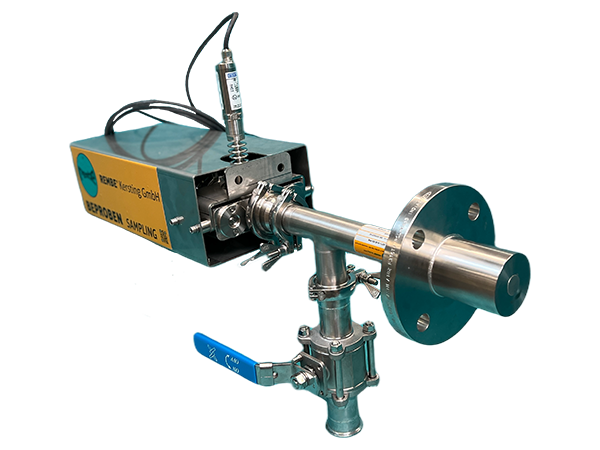
Sampling from mixers SAMscrewtasty
An innovative device to take material directly from the container wall.
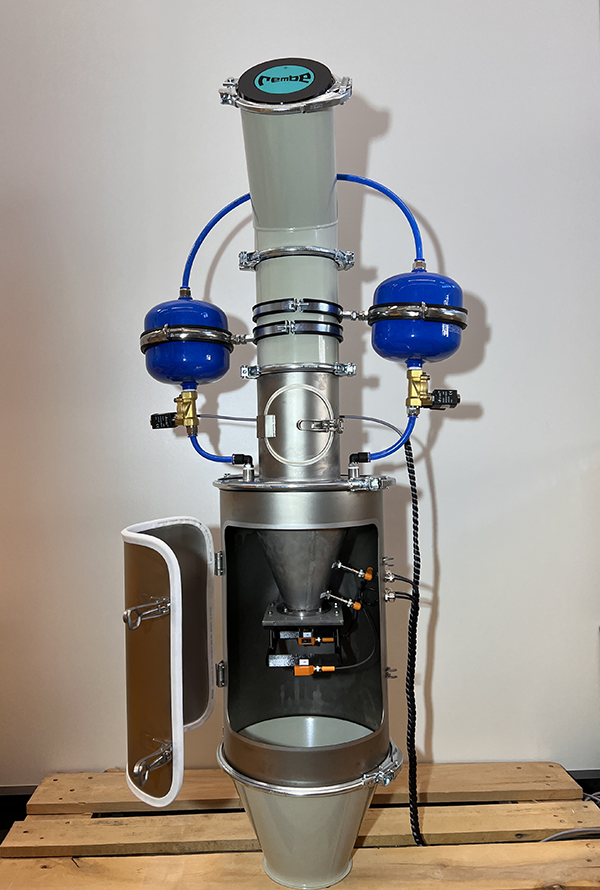
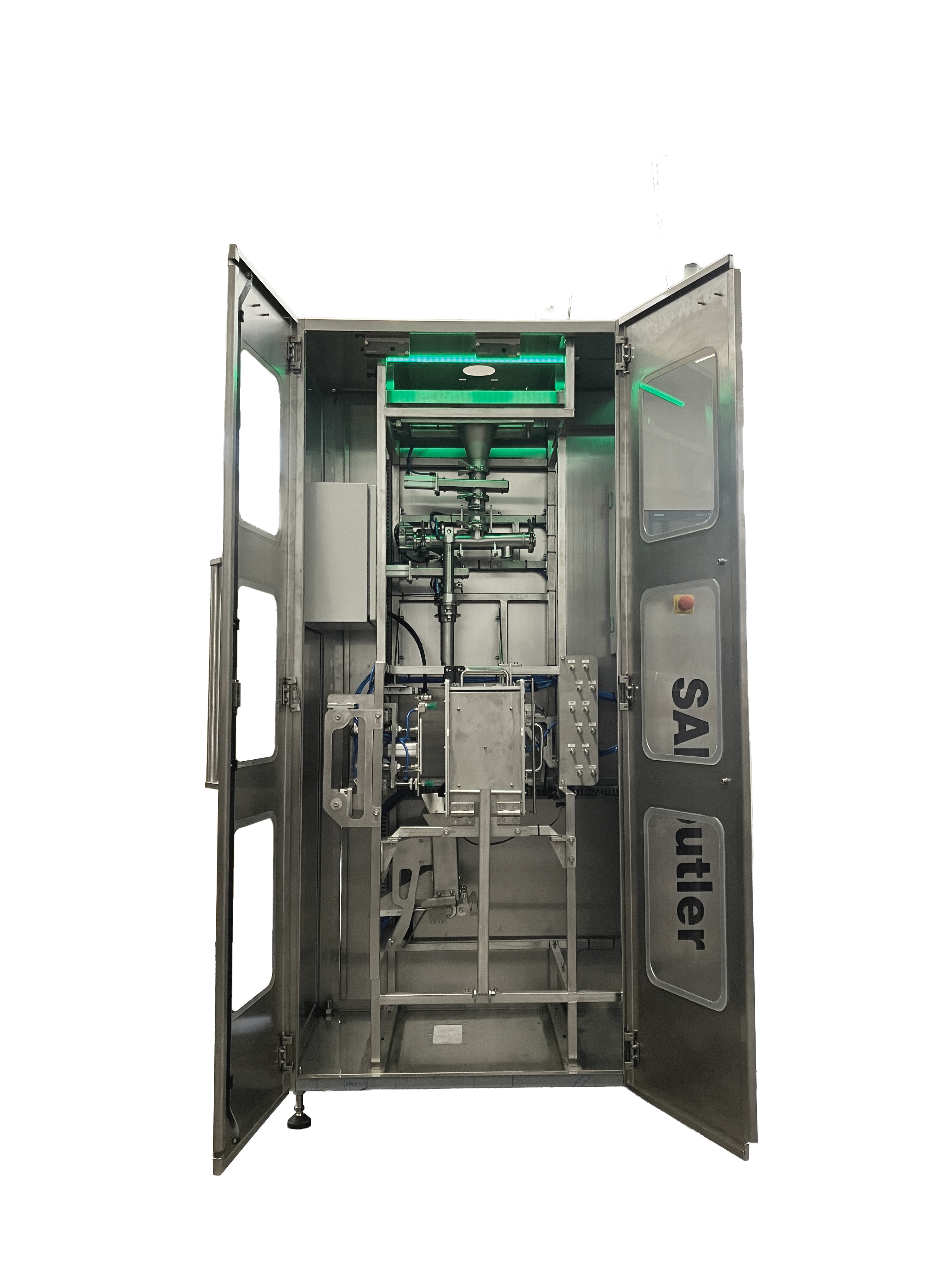
Automatic Sampling System SAMbutler
The secure process management for the entire sampling is ensured through connections with contamination-free conveyor systems and analysis options.