
Hastelloy
Hastelloy is the brand name of a group of highly corrosion-resistant nickel-based alloys and a registered trademark of the US manufacturer Haynes International, Inc. This group of materials is resistant to many aggressive chemicals. The alloys consist essentially of nickel, combined primarily with chromium, molybdenum and, depending on the variant, tungsten, iron or cobalt. Common types include Hastelloy C-276 (material no. 2.4819), C-22 (2.4602), B and X – each variant is optimised for a specific corrosion, temperature or resistance profile. Hastelloy is typically used where conventional stainless steels reach their limits.
Special properties
The outstanding feature of Hastelloy is its exceptional corrosion resistance – in both oxidising and reducing media. The C-276 grade, for example, is one of the few materials resistant to hypochlorites, wet chlorine gas and chlorine dioxide, and is frequently used in hot, contaminated mineral acids, organic acids and seawater. Further characteristic properties include excellent resistance to pitting as well as crevice and stress corrosion cracking, good resistance to chloride ion attack, and high temperature strength and longevity. These properties reduce failures and maintenance effort and increase operational reliability in chemically demanding environments.
Use in bulk material sampling
In the context of the sampling of bulk material, Hastelloy is a candidate for the production of wetted components of sampling devices – wherever the sampler material comes into direct contact with corrosive, aggressive or reactive bulk materials and their residual moisture or vapours. Possible applications include sampling probes, screws, plungers, nozzles or valve components that come into contact with chemically demanding powders, granulates, salts or fertilisers. Hastelloy is particularly suitable when a highly corrosion-resistant stainless steel (e.g. 1.4404 / 1.4571) is no longer sufficient, for example with chloride- or acid-containing media. As Hastelloy is a comparatively cost-intensive material, it is chosen specifically for the ingredients or material parameters that genuinely require its properties – not as a standard material. As with other materials, selecting the appropriate material for sampling equipment depends on the type of bulk material, the specific sampling and analysis requirements, and the applicable safety and quality standards.
In which industries
Hastelloy is relevant wherever aggressive or corrosive media occur in bulk material sampling. Key areas are chemistry and chemical process engineering (acids, chlorides, oxidising salt solutions), pharmaceutical and fine chemicals (corrosive active ingredients and solvents), the fertiliser industry, and increasingly environmental, seawater and hydrogen technology. Hastelloy G-30 is an alloy particularly resistant to phosphoric acid and is therefore well suited for fertiliser production plants. Industries such as mining + quarry or the food industry generally manage with standard stainless steels; here, Hastelloy is only required in special cases.
Legal requirements and guidelines
There is no specific regulation that mandates Hastelloy in sampling. What is decisive is rather the material suitability within the framework of the regulations applicable to the respective application. Particularly relevant are the material standards via the European material numbers (e.g. 2.4819 for C-276, 2.4602 for C-22) and material data sheets (including VdTÜV material sheet 479 for 2.4602). Where pressure equipment is concerned, the Pressure Equipment Directive 2014/68/EU applies; in ATEX-relevant environments, the ATEX requirements apply. For wetted parts in sampling, the application-specific standards and guidelines on material resistance, cleanability and, where applicable, product compatibility also play a role. The specific requirements vary depending on the industry, country and type of bulk material.
Interesting REMBE® Kersting solutions on this topic
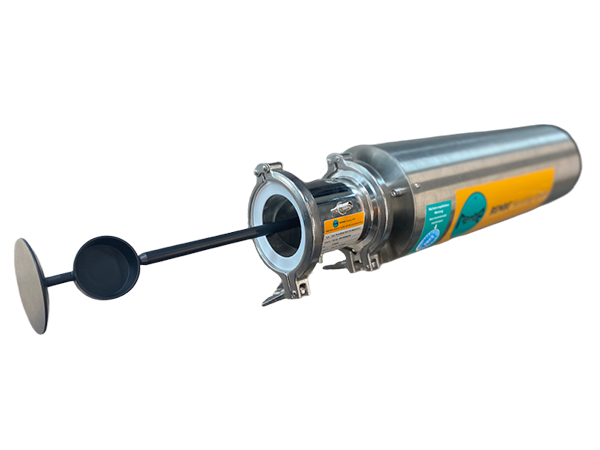
Cup sampler SAMglide
Cup samplers are specifically designed for sampling free-falling materials and offer a range of advantages.