
Homogeneity
Homogeneity in the sampling of bulk materials refers to the extent to which the physical and chemical properties of the material are consistent throughout the entire sample. In other words, a homogeneous sample is one where all parts of the sample exhibit the same characteristics. The goal of proper sampling often revolves around obtaining a representative, homogeneous sample that accurately reflects the entire material intended for analysis.
However, achieving homogeneity in the sampling of bulk materials comes with its challenges. Bulk materials are often heterogeneous, meaning they can have varying particle sizes, shapes, and densities. Furthermore, they might contain impurities or consist of several different materials.
To obtain a representative, homogeneous sample, sampling procedures often involve random selection of material from various parts of the bulk material. After sampling, the collected material can be further homogenized, for instance, through mixing or grinding, to ensure all parts of the sample are evenly represented.
It's important to note that the requirements for homogeneity can vary based on the specific purpose of the sampling and analysis. In some cases, it may be necessary to consider the material's heterogeneity to enable accurate characterization or quality control.
Interesting REMBE® Kersting solutions on this topic
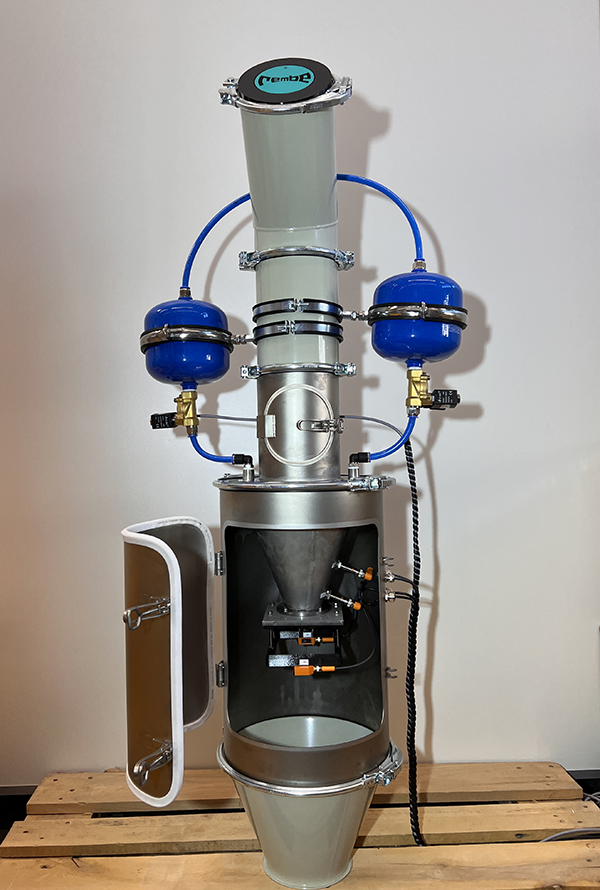

Automatic Sampling System SAMbutler
The secure process management for the entire sampling is ensured through connections with contamination-free conveyor systems and analysis options.

Cup sampler SAMglide
Cup samplers are specifically designed for sampling free-falling materials and offer a range of advantages.