
Sampling in Battery Recycling: Why Containment and Representativeness Must Be Considered Together
In battery recycling, two requirements come together that are often played off against each other in practice. One is: The material must not reach anyone. The other is: The sample must accurately represent the material. Those who only fulfill the first build a dense facility with unusable analysis values. Those who only fulfill the second endanger employees. Both requirements together are the actual engineering task.
Why the sample counts in battery recycling regulation
The EU Battery Regulation (Regulation (EU) 2023/1542) defines recycling efficiency as a mass ratio: recovered secondary raw materials in relation to the mass of the spent batteries that were fed into the process. In addition, there are minimum values for the material recovery of individual raw materials: from the end of 2027, 90 percent for cobalt, copper, lead, and nickel, as well as 50 percent for lithium, and from the end of 2031, then 95 and 80 percent, respectively.
These quotas are not self-reported. They must be substantiated – and the evidence consists of analysis values of input and output streams. Each of these analysis values applies exactly to the sample from which it was obtained. Thus, the entire chain of evidence depends on the question of how representative this sample was. An improper sampling does not create a measurement error in the laboratory but a false quota in the reporting.
Additionally, there is the status change of the central intermediate product: The EU Commission adjusted the waste catalog in 2025 by delegated legal act, and black mass has since been considered hazardous waste. Thus, its export to non-OECD countries is prohibited under the Basel Convention – and processing takes place where sampling must also occur.
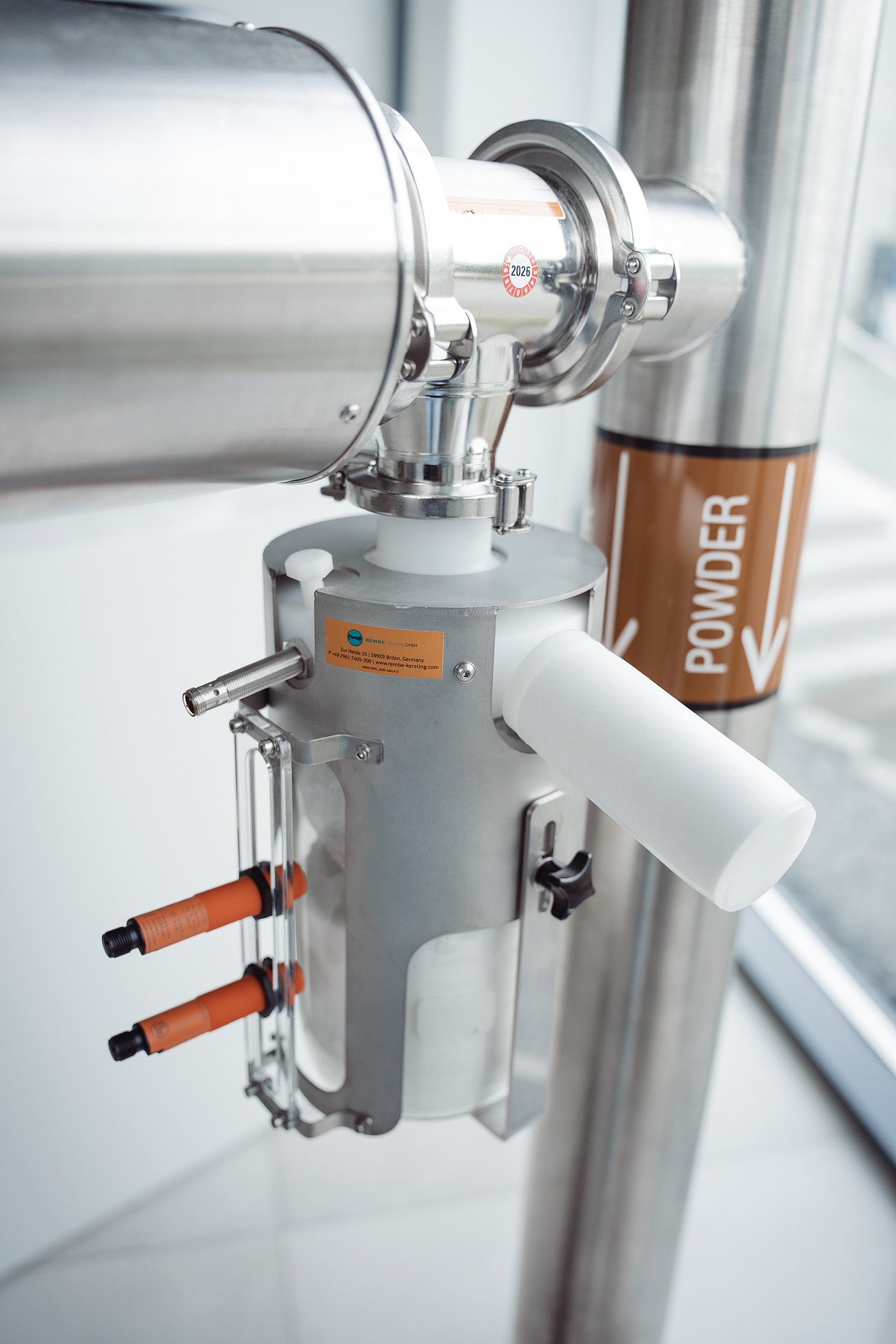
Sampling valve SAMflow
Black mass is the most difficult case of representativeness.
Black mass is produced after lithium-ion cells have been disassembled and shredded. The result is a mixture of active material particles, graphite, foil residues from copper and aluminum, housing fragments, and separator material, with widely varying grain sizes and bulk densities. And the composition also fluctuates with battery type and manufacturer.
From a sampling perspective, this is the extreme case: A material whose components differ greatly physically, segregates with every movement. A single grab sample cannot represent such a batch. Many individual samples are necessary, distributed over the product stream, which are combined into a composite sample: that is, inline sampling from the ongoing process instead of sampling from the stationary heap.
This is exactly where the conflict with containment arises: Each additional sampling is an additional exposure in open sampling. Only a closed, automated sampling process allows the number of individual samples to be increased without lowering the safety level.
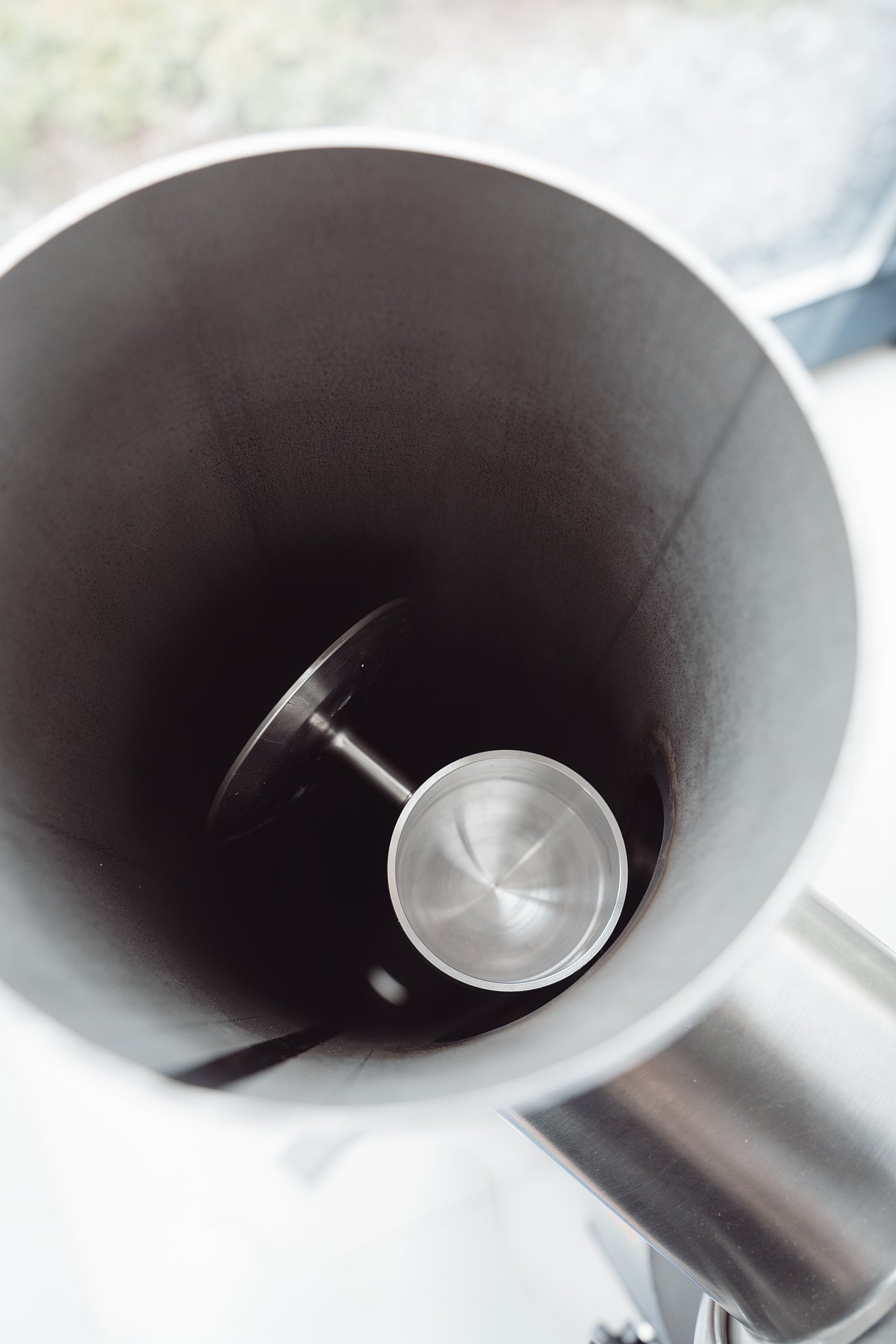
Cup Sampler SAMglide
Containment: the process determines the protection class
Sampling in battery recycling places particularly high demands on safety, tightness, and containment. For battery powders (such as lithium hydroxide, black mass, or other battery raw materials), employee protection and product safety are always the top priorities. A closed sampling process minimizes contact with the product and prevents the release of health-hazardous dusts.
The required level of protection cannot be determined across the board. It results from the material assessment of the medium – in practice through workplace limit values or an OEB classification. The same systematics that dictate the containment standard in the pharmaceutical industry are also the right starting point for battery materials: first the classification of the medium, then the design of the sampler.
Two other properties of these materials belong in the same consideration: ultra-dry powders tend to electrostatic charging, and metal-containing dusts can form ignitable atmospheres – so the design must also cover the requirements from ATEX.
Materials and Coatings: according to Medium, not Catalog
Every process places different demands on material, temperature, pressure, and product handling. Therefore, the sampling solutions are created individually and precisely tailored to the respective application.
- Materials: In addition to various stainless steels, highly resistant materials such as Hastelloy® are used to safely sample aggressive or corrosive media – lithium hydroxide, for example, is strongly alkaline.
- Coatings: For particularly demanding applications, coatings made of PTFE or ETFE are available. They increase chemical resistance, reduce adhesion, and facilitate cleaning.
- Sealing systems: Pressure-resistant and process-safe seals prevent hazardous dusts or particles from escaping uncontrollably.
The point behind the list of materials is not the list itself, but the order: First, the medium is evaluated, then the material is chosen. Stainless steel where it suffices, Hastelloy® where it does not. A sampler that is generally offered in the highest material class is not a signal of competence, but a renunciation of design.
Inertization: Product protection and cleaning in one step
For reactive or moisture-sensitive products, the sampler can be equipped with an inert gas injection. It protects the product from contact with oxygen or moisture and simultaneously serves to clean the sampler by reliably removing product residues after sampling.
This dual function is more than an elegant solution: It addresses two sources of error with one measure. The product does not change between sampling and analysis, and the next sample is not contaminated by residues from the previous one – cross-contamination between different batches or battery types is a real risk with fluctuating black mass composition.
Constructive details that make the difference in operation
- The sample piston is only in the product stream during sampling. Outside of the process, it remains outside the process. This significantly reduces wear, product adhesion, and contamination – and is the decisive difference from a permanently immersed piston sampler in abrasive fractions such as film residues.
- Monitoring of the piston position. Upon request, the position is monitored via inductive limit switches or other sensors. This ensures at all times that the sampler is in the correct end position – and that the sampling has actually been carried out. A mechanical process becomes a documentable event.
- Integration via weld-on nozzle. The sampler can be quickly integrated into existing or new process systems. Installation, maintenance, and later retrofitting remain uncomplicated.
- Dead space-free design. In areas in contact with the product, a dead space-free design is the prerequisite for the cleaning to be effective at all.
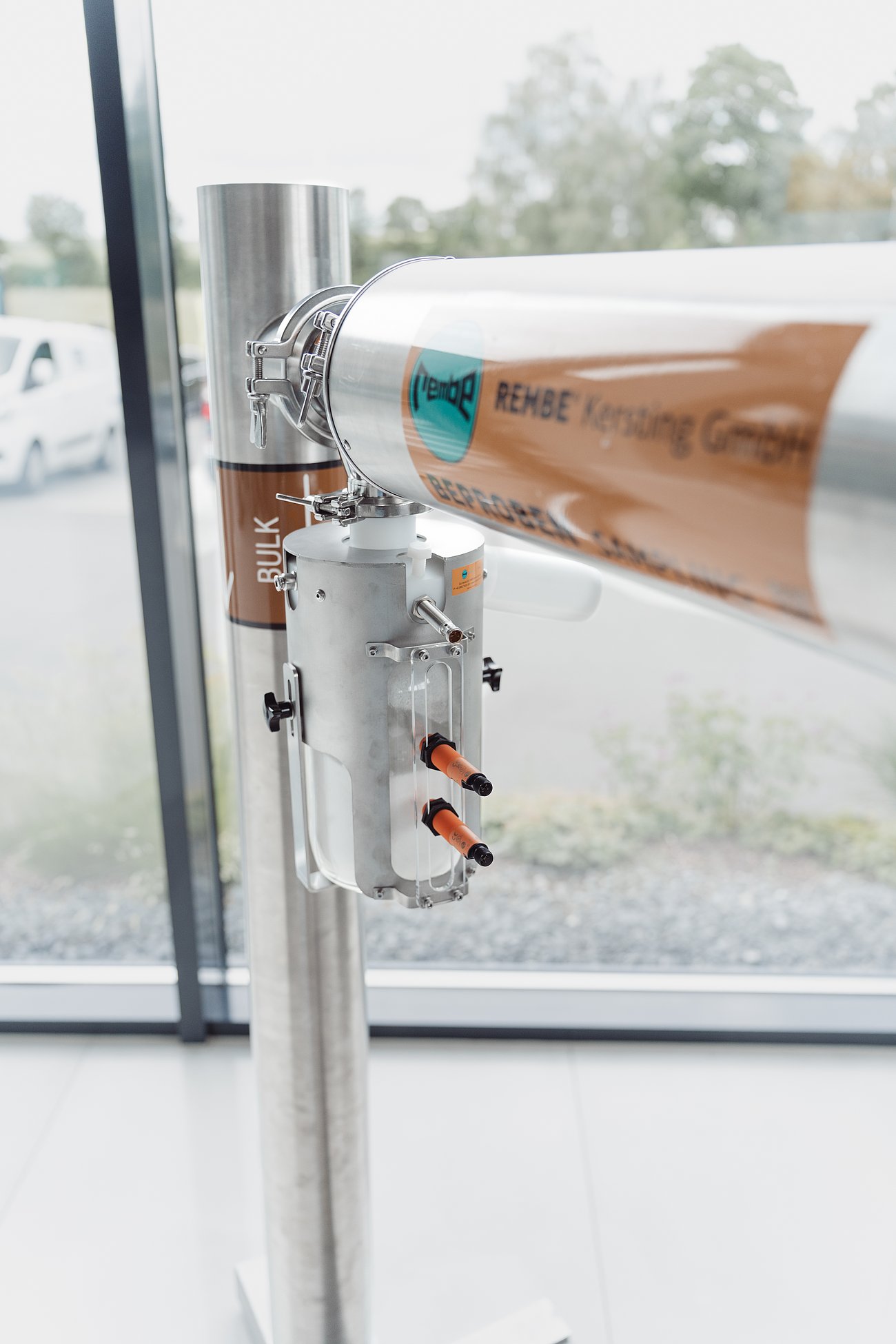
Cup Sampler SAMglide
Transfer and Packaging: the chain does not end at the sampler
Safety does not end with sampling. Sample transport, transfer, and packaging can also be fully encapsulated and automated. Depending on the requirement, the transfer is carried out in endless liners, sample bottles, bags, or via sluice systems – allowing for the realization of the appropriate solution for every containment requirement.
In combination with the sampling system SAMbutler, the sample is automatically filled into bottles or bags, sealed, and clearly labeled. This creates a tamper-proof and fully traceable sampling process, which is a prerequisite for assigning an analysis value to a specific batch.
Intelligent functions such as bottle recognition, fill level detection, and monitoring of system functions ensure a safe and reproducible process. Operating errors are avoided, and system availability increases.
The systems from REMBE® Kersting for this task
- Containment sampler SAMsafe for closed sampling from critical and health-hazardous media.
- Piston sampler SAMplug for sampling from the product stream with defined piston movement.
- Sample transport system for the encapsulated path of the sample to the transfer point.
- Sampling system SAMbutler and Sample carousel SAMbutler MIDI for filling, sealing, and labeling.
- Control system SAMdrive for complete automation from triggering to the finished, packaged sample.
Through numerous projects in the battery and raw material industry, there is extensive experience in handling demanding battery materials. This know-how is directly incorporated into the design of the sampling systems.
Five Questions Before the Interpretation
- How is the medium classified in terms of occupational safety law and what containment level results from this?
- Is the product reactive or moisture-sensitive, requiring inertization?
- How many individual samples would it take to truly represent the heterogeneity of the batch – and does the current process allow for this number?
- In what form must the sample be handed over: endless liner, bottle, bag, or lock?
- Is it documented that a sample was taken – or only that it should have been taken?
The last question is the most unpleasant, but crucial in audit situations.
Conclusion
The sampling systems for battery recycling combine the highest safety standards with maximum flexibility. Individual material designs, pressure-resistant seals, inertization, automated sampling, as well as diverse transfer and packaging solutions enable a closed containment solution for demanding battery materials. The result is reproducible samples, optimal protection of employees and equipment, and an economical, fully automated sampling process.
And a side effect that increasingly counts in electromobility: Those who sample their streams cleanly can not only achieve their recycling rates but also prove them.