Representative sampling from big bags
A Big Bag quickly holds a ton or more – and that is exactly what makes sampling challenging: During filling, transport, and emptying, the bulk material segregates, fine and coarse fractions separate, moisture migrates. A sample taken only from the surface or from a single spot does not represent the batch, and any subsequent laboratory analysis becomes worthless. What is needed is a representative sample across the entire cross-section, reproducible and without contamination – often under cramped conditions at the filling station. This overview shows what is important when sampling from Big Bags – from the requirements and sampling strategy to the selection criteria.
Selection criteria
Whether a big bag sample truly represents the batch depends on these criteria:
-
Cross-Sectional Sampling
The sample must be taken across the entire cross-section of the material, not just from the surface.
-
Accounting for Segregation
The sampling method must capture the separation of fine and coarse particles caused by handling.
-
Reproducibility
Applying the same sampling procedure to every batch ensures comparable laboratory results.
-
Prevention of Cross-Contamination
No carryover of material between Big Bags, especially when changing products.
-
Suitability for Space and Handling Requirements
Suitable for use in confined filling and discharge stations and with different container sizes.
-
Automation Capability
Integration with filling and discharge control systems for documented, repeatable sampling.
Solution approaches
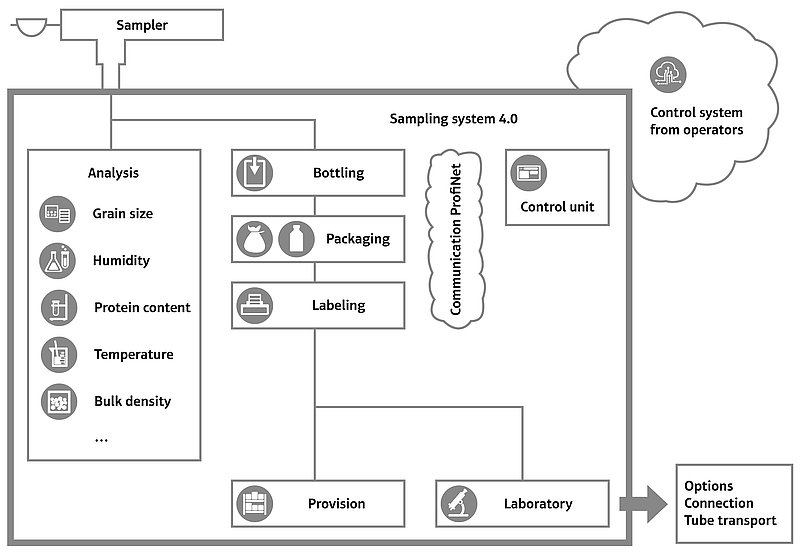
The methods range from manual sampling lances and gravity samplers in the filling path to automated sampling systems at the filling or emptying station. Manual sampling is flexible but delivers highly variable results depending on the sampling location and operator. In contrast, systems integrated into the material flow take samples independently of the operator and capture the cross-section of the flow rather than just the surface of the container. Which approach is suitable depends on the container size, bulk material characteristics, and the required degree of automation.
The approach of REMBE® Kersting
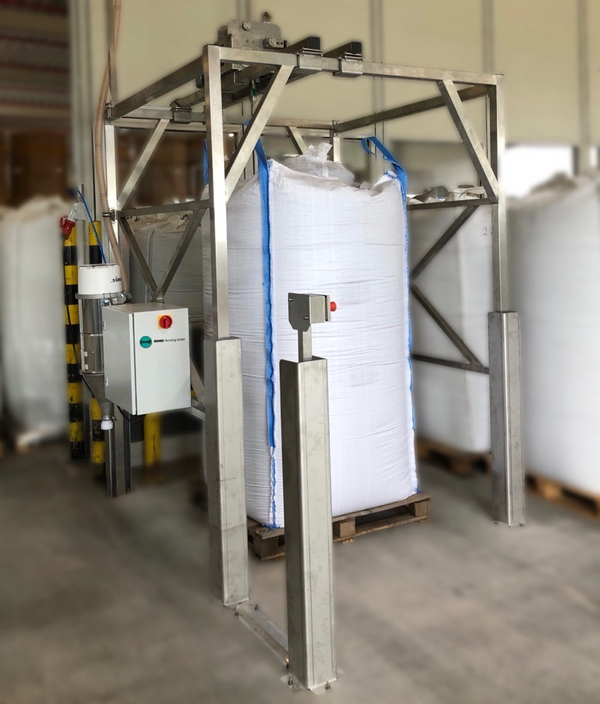
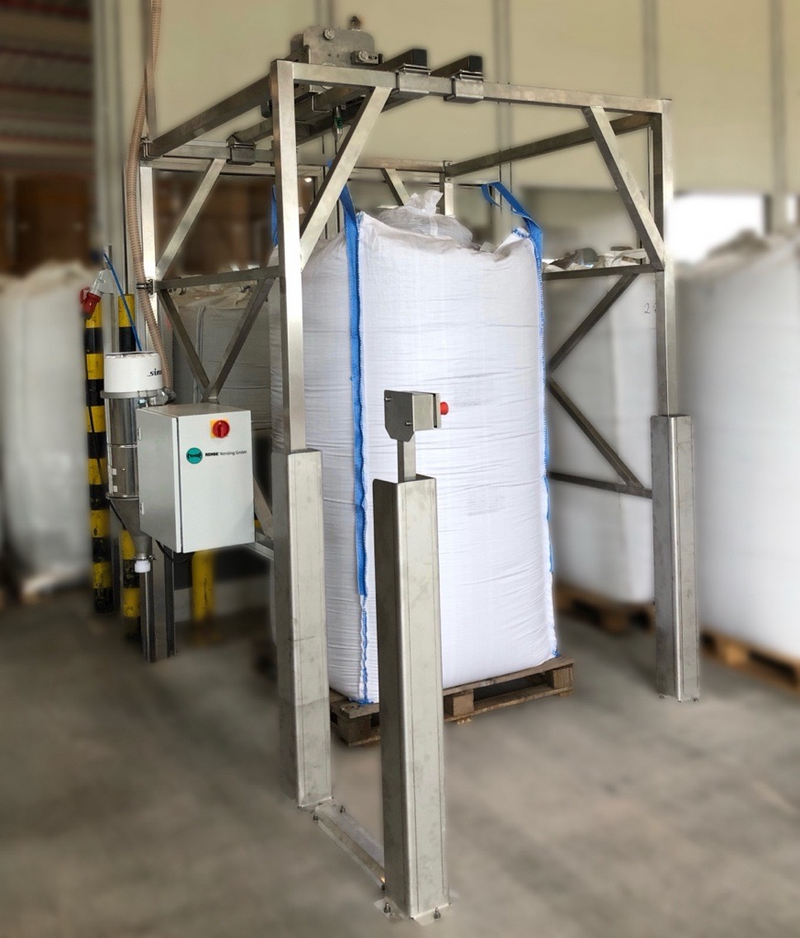
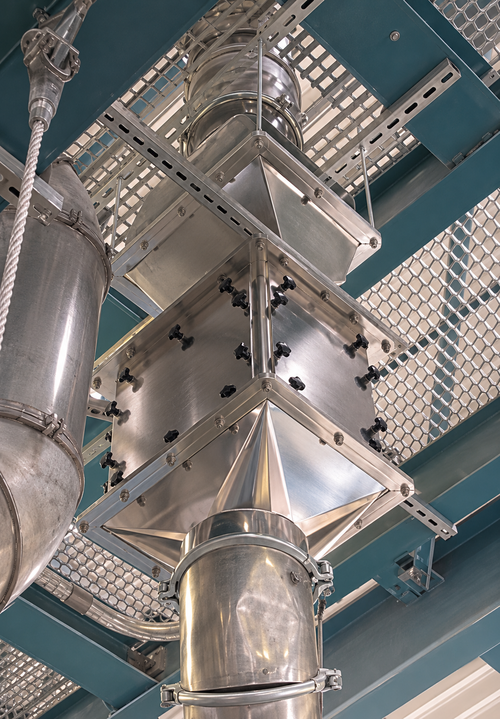
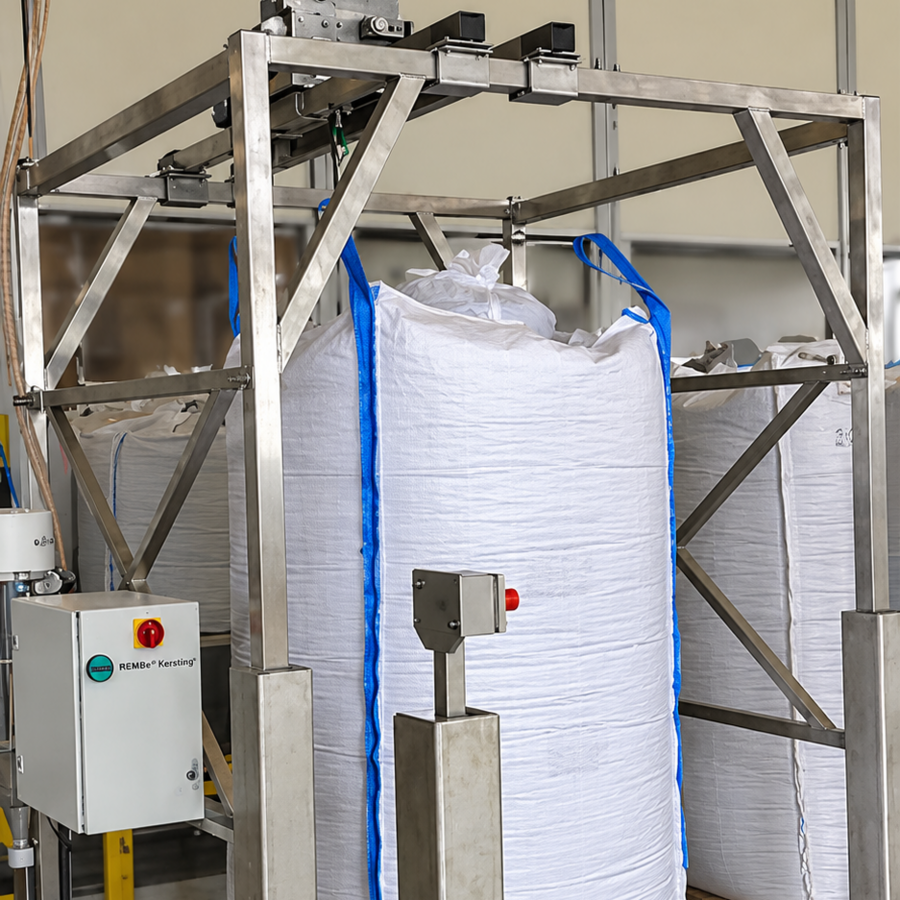
For sampling from big bags, REMBE® Kersting uses the BigBag sampling system SAMbag to take samples directly from the standing big bag. Furthermore, a sample can also be taken from the material flow—both during filling and emptying. Because the sample captures the flow across its cross-section, any segregation that occurred during handling is represented rather than overlooked. Sampling is carried out in a closed manner, so that nothing is carried over between two big bags—even when changing products.
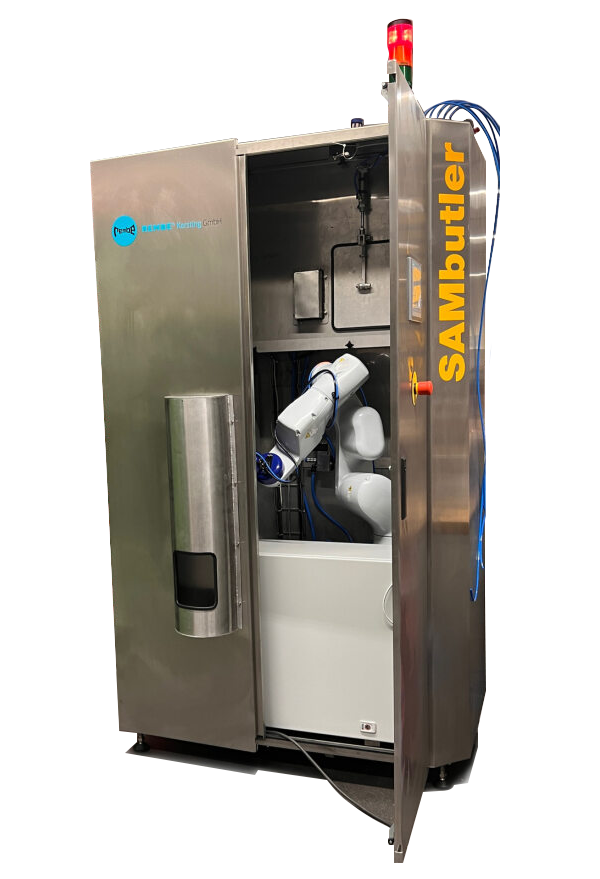
Which version is suitable in each individual case depends on the filling station, bulk material, and environmental conditions; the design is application-specific. For automated filling into changing containers, sampling can be supplemented with the SAMbutler sample packaging system.
For representative sampling from big bags, REMBE® Kersting thus offers automated, contamination-free sampling—the basis for reliable quality assessment.
REMBE® Kersting SOLUTION